
Dealing with Box Tree Moth Caterpillar...
FEW plants have such a rich horticultural history as ornamental Box. But these remarkable plants are under threat from an invasive caterpillar which can decimate them at shocking speed. In our first blog of 2026 we advise on how to save your valuable box.
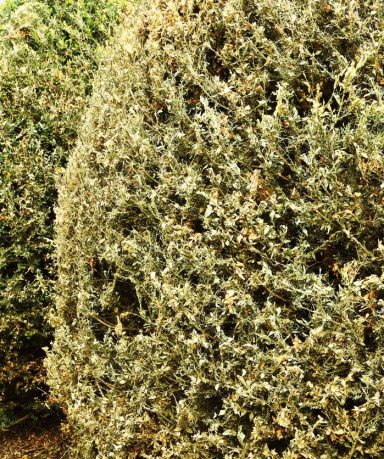
BOXWOOD plants clipped into ornamental shapes and structures have been a horticultural staple for millennia. The earliest known use of Box (Buxus Sempervirens) as an architectural plant dates back to 4,000 BC in Ancient Egypt, where it was shaped into hedges for formal gardens. The Greeks and Romans also valued Box for its durability and aesthetic appeal, clipping it into highly decorative topiary structures. During the Middle Ages Buxus was cultivated across monasteries throughout Europe as it was believed to have medicinal properties. The Renaissance saw a resurgence in its popularity as an ornamental plant which has continued into the modern era. Few other plants have had such a rich horticultural history. Today you will see cultivated Box everywhere including historical gardens, civic settings such as public parks, landscaped grounds in the public realm, and residential developments. But sadly, this historic plant is often found to be in a terrible and often terminal state due to a lack of awareness of the devasting damage that can be caused by an invasive caterpillar. The Box Tree Moth Caterpillar feeds on the foliage of Buxus and can ruin vibrant and valuable plants in a matter of days, leaving behind a defoliated eyesore of twigs, webs and frass (droppings). Left untreated, plants are likely to die. Decimated plants are an all-to-common sight throughout England where it is not unusual to discover undiagnosed infestations and their unsightly aftermath in public settings. What is saddest of all is that the damage continues at an almost epidemic level despite it being almost entirely preventable with the right knowledge and know-how.
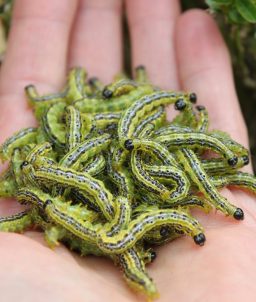
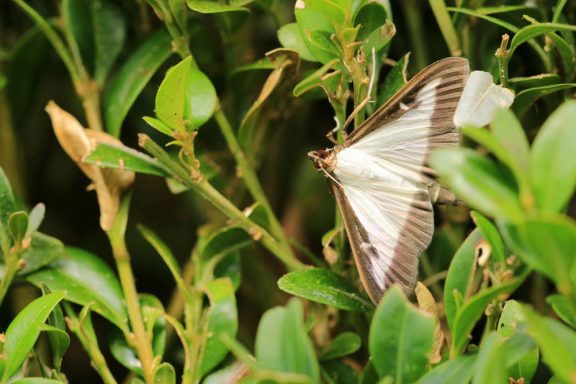
Box Tree Moth Caterpillars are the larvae of the Box Tree Moth (Cydalima perspectalis). The moths were first discovered in northern China in 1859. It is thought their widescale spread across Europe was not from migration by flight but as a result of commercial transfer of plants carrying undetected eggs or caterpillars, with damage first discovered to Box in the Near Continent around 2007. The moths are thought to have reached the UK around 2010, where caterpillar damage to Buxus began to be detected in London and the South East. Today there are few corners of England that the distinctive green and black caterpillars have not reached. The damage they cause to Box has become such a problem that requests for help in dealing with them is the number one enquiry made to the Royal Horticultural Society (RHS) Gardening Advice Line.
The caterpillars, which are active between March and October, have a voracious appetite and few natural predators. Infestations to Buxus plants can occur multiple times during these months as the caterpillars turn to moths which in turn lay eggs which hatch into caterpillars, with around three such lifecycles in the Spring and Summer. Female moths can fly up to 10 kilometres in their lifetime, locating new Box plants to lay their eggs on for their caterpillar offspring to hatch and defoliate. Those who have experienced the devastation caused by the caterpillars are often left shocked at the incredible speed at which plants can be defoliated. It is not uncommon for home owners to return from a fortnight holiday to discover the Box in their gardens completely destroyed. Likewise Buxus plants in civic settings are often decimated because of a lack of awareness of the caterpillars and the need to treat infestations urgently. Box is an incredibly hardy plant and can recover if an infestation is discovered in time and treated with haste. But if the caterpillars are left, once they have defoliated leaves, they will begin to eat the bark and the cambium layer of the Boxwood, killing the plants. In some cases the cost of replacing dead Box can run into thousands of pounds. Some historical plantings are simply irreplaceable. And yet the cost of prevention is minimal.
At Pastoral, we can treat and prevent Box Tree Moth Caterpillar infestations using a non-chemical, naturally occurring bacterium called Bacillus Thuringienis which does not harm other insects including pollinators such as bees and butterflies, or other wildlife, pets, or people. We use a commercial-grade version of Bacillus which is applied to the foliage of Box plants when an infestation is discovered which will kill the caterpillars when they ingest the treated leaves. Specialist spraying certification is required to lawfully treat Buxus with the high-strength bacterium. We do not use or recommend any other methods of dealing with Box Tree Moth Caterpillar infestation such as chemical herbicides or pheromone traps. Pastoral does not use chemical pesticides for ethical reasons as they can be harmful to vital pollinators such as bees, butterflies and moths. Box infested with the caterpillars must be treated when the weather is dry. A course of spraying should continue throughout the warm season approximately every three to four weeks afterwards as a precaution against further outbreaks. Pastoral has travelled across the southern counties of England to treat box tree moth caterpillar in commercial settings. Our expertise has even been called upon to save the Buxus hedges at the internationally-recognised landmark that is Parliament Square in Westminster, London. Box Tree Moth Caterpillar is now active for the warm season once again. Check plants by looking for evidence of defoilation, webbing and frass similar to the picture above. The caterpillars will often begin their onslaught in shaded and sheltered corners of Box, away from direct sunlight, before rapidly advancing to devour whole hedges and shrubs. Pastoral operates from Tewkesbury in Gloucestershire and Minster Lovell in Oxforshire and covers the Cotswolds and neighbouring counties including Worcestershire and Wiltshire. We are able to treat most serious Box infestations in these areas within 48 hours of intial contact subject to weather conditions permitting treatment. Please get in touch via or contacts page should you need our help.